

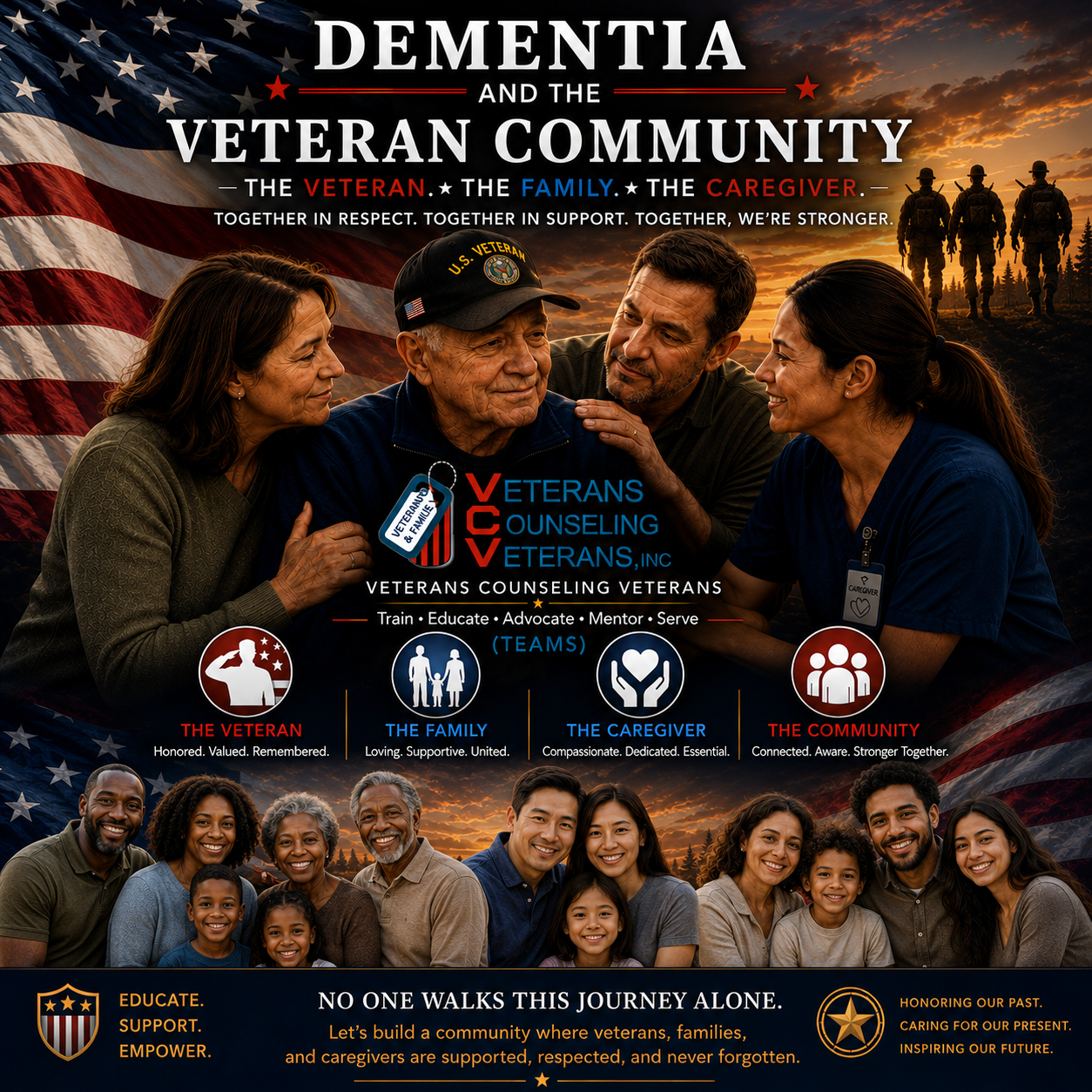
Dementia and the Veteran Community
Supporting the Veteran, the Family, and the Caregiver
The growing number of veterans living with dementia affects far more than the individual veteran. Dementia can change family relationships, increase caregiver responsibilities, create financial and emotional stress, and make it difficult to understand or access available services.
Veterans Counseling Veterans is developing a community-based program designed to support the veteran, the family, and the caregiver throughout the dementia journey.
Our goal is to ensure that no veteran or family has to navigate dementia alone.
Our Approach
Veterans Counseling Veterans uses a compassionate, veteran-centered framework that recognizes the needs of three closely connected groups:
The Veteran
We support veterans living with dementia by helping them and their families identify appropriate services, benefits, healthcare resources, long-term care options, and community programs.
Our work is grounded in dignity, respect, safety, and recognition of the veteran’s military service.
The Family
Dementia affects the entire family. Spouses, adult children, siblings, and other loved ones may suddenly find themselves making difficult decisions, managing appointments, coordinating care, or responding to changes in the veteran’s behavior and abilities.
We help families better understand dementia, prepare for changing needs, and connect with trusted information and resources.
The Caregiver
Caregivers often carry significant emotional, physical, and financial responsibilities. Many provide support every day while also managing employment, family obligations, and their own health.
Our program will help caregivers find encouragement, education, peer support, respite resources, and connections to organizations that can assist them.
Program Services
System Navigation and Resource Connections
Veterans and families may need help navigating several systems at the same time, including the Department of Veterans Affairs, Medicare, Medicaid, state and local aging services, healthcare providers, memory care programs, legal services, and long-term care facilities.
Veterans Counseling Veterans will help families:
- Identify appropriate veteran and community resources.
- Understand available programs and services.
- Prepare questions for healthcare and service providers.
- Connect with benefits, care coordination, and aging-service organizations.
- Locate dementia education, memory care, transportation, legal, and caregiver-support resources.
- Reduce confusion and avoid unnecessary delays in obtaining assistance.
Veterans Counseling Veterans serves as a connector and advocate. We do not replace medical, legal, financial, or benefits professionals.
Caregiver and Family Support Groups
Caregivers and family members need safe spaces where they can speak openly, learn from others, and receive encouragement from people who understand their experiences.
Our facilitated support groups will provide opportunities to:
- Share experiences without judgment.
- Learn practical caregiving strategies.
- Discuss caregiver stress and burnout.
- Understand behavioral and communication changes associated with dementia.
- Build relationships with other veteran families.
- Hear from healthcare, legal, benefits, and aging-service professionals.
- Develop stronger personal and community support systems.
Support groups may be offered in person, virtually, or through community partner organizations.
Advocacy
Veterans with dementia and their caregivers may experience gaps in services, barriers to care, or difficulty making their needs understood.
Veterans Counseling Veterans will advocate for:
- Timely access to appropriate services.
- Veteran-informed dementia education and caregiver support.
- Stronger coordination among veteran, healthcare, aging, and community organizations.
- Greater recognition of the needs of spouses and family caregivers.
- Improved community awareness of dementia within the veteran population.
- Policies and partnerships that promote dignity, safety, and quality of life.
We will also help elevate the voices and experiences of veteran families while protecting their privacy and personal information.
Building a Coordinated Community of Support
No single organization can meet every need of a veteran living with dementia. Effective support requires collaboration among families, caregivers, the Department of Veterans Affairs, healthcare providers, senior-service organizations, memory care programs, legal professionals, community leaders, and veteran-serving organizations.
Veterans Counseling Veterans is working to build a coordinated network that connects these resources and strengthens the support available to veterans and their families.
Our framework is simple:
Educate. Connect. Advocate. Support.
Who We Serve
This program is intended to support:
- Veterans living with dementia or experiencing memory-related concerns.
- Spouses and partners of veterans with dementia.
- Adult children and other family members.
- Family caregivers and unpaid caregivers.
- Surviving spouses who previously served as caregivers.
- Community organizations assisting veterans and older adults.
- Professionals seeking veteran-informed dementia resources and partnerships.
You Are Not Alone
A dementia diagnosis can bring fear, uncertainty, grief, and difficult decisions. It can also create an immediate need for trustworthy information and compassionate support.
Veterans Counseling Veterans is committed to walking alongside veterans, families, and caregivers by helping them understand their options, connect with resources, strengthen their support systems, and have their concerns heard.
Together in respect. Together in support. Together, we are stronger.
Connect With Us
Are you caring for a veteran with dementia, seeking resources for your family, or interested in becoming a community partner?
Contact Veterans Counseling Veterans to learn more about available resources, upcoming support groups, educational programs, volunteer opportunities, and partnership initiatives.
Veterans Counseling Veterans
Supporting the Veteran. Supporting the Family. Supporting the Caregiver.